Quality Control.
From Request to Protocol.
VT on 100% of joints. Smart RT and UT sampling by pipeline category. Results are recorded in the system - the status of every joint is visible in real time.

The Cost of Manual NDT Tracking
Paper-based NDT logs at industrial facilities are not just inconvenient. They are direct financial and reputational risks.
Uninspected Joints
In paper logs a joint can easily be missed: shift changed, log lost, supervisor on vacation. The system records every joint and won't let you close a phase with gaps.
Waiting for Protocols
The lab delivers protocols on paper - the PTO engineer waits 3-5 days to close the act. In the system the result appears as soon as the lab technician enters it.
Late-Stage Defects
If one welder is producing defective joints, it shows up only at handover - when fixing is late and expensive. The system shows defect rates in real time per every welder.
Coverage by NDT Method
The system monitors compliance with the required inspection volume for each method. Sampling percentage is calculated automatically based on pipeline category.
All joints without exception. Visual and dimensional inspection is mandatory before NDT.
Radiographic testing. Volume depends on pipeline category per industrial safety (I-IV).
Ultrasonic testing. Alternative to RT for DN 100+ mm with wall thickness from 4 mm.
Magnetic particle testing. Applied to fillet welds and stress concentration zones.
Penetrant testing. For surface defect detection in non-magnetic materials.
RT/UT Volume by Pipeline Category (SP 75, GOST)
| Category | Application | RT/UT Volume | VT |
|---|---|---|---|
| I | Category I pipelines (H2S, P > 10 MPa) | 100% | 100% |
| II | Category II pipelines (P 1.6-10 MPa) | 50% | 100% |
| III | Category III pipelines (P up to 1.6 MPa) | 25% | 100% |
| IV | Category IV pipelines (utility) | 10% | 100% |
Intelligent Joint Sampling
The system generates a list of joints for NDT based on the normative percentage by pipeline category. The NDT inspector or PTO engineer runs the sampling - the system selects joints randomly in the required volume.
Pipeline Category
Sampling volume is set by line category: 10%, 25%, 50% or 100% of welded joints.
Scope Expansion on Defect
A defect is detected - the system expands the sample to additional joints by the same welder per standard.
Sampling History
Every sampling run is recorded: who, when, which joints. Full audit trail for construction supervision.
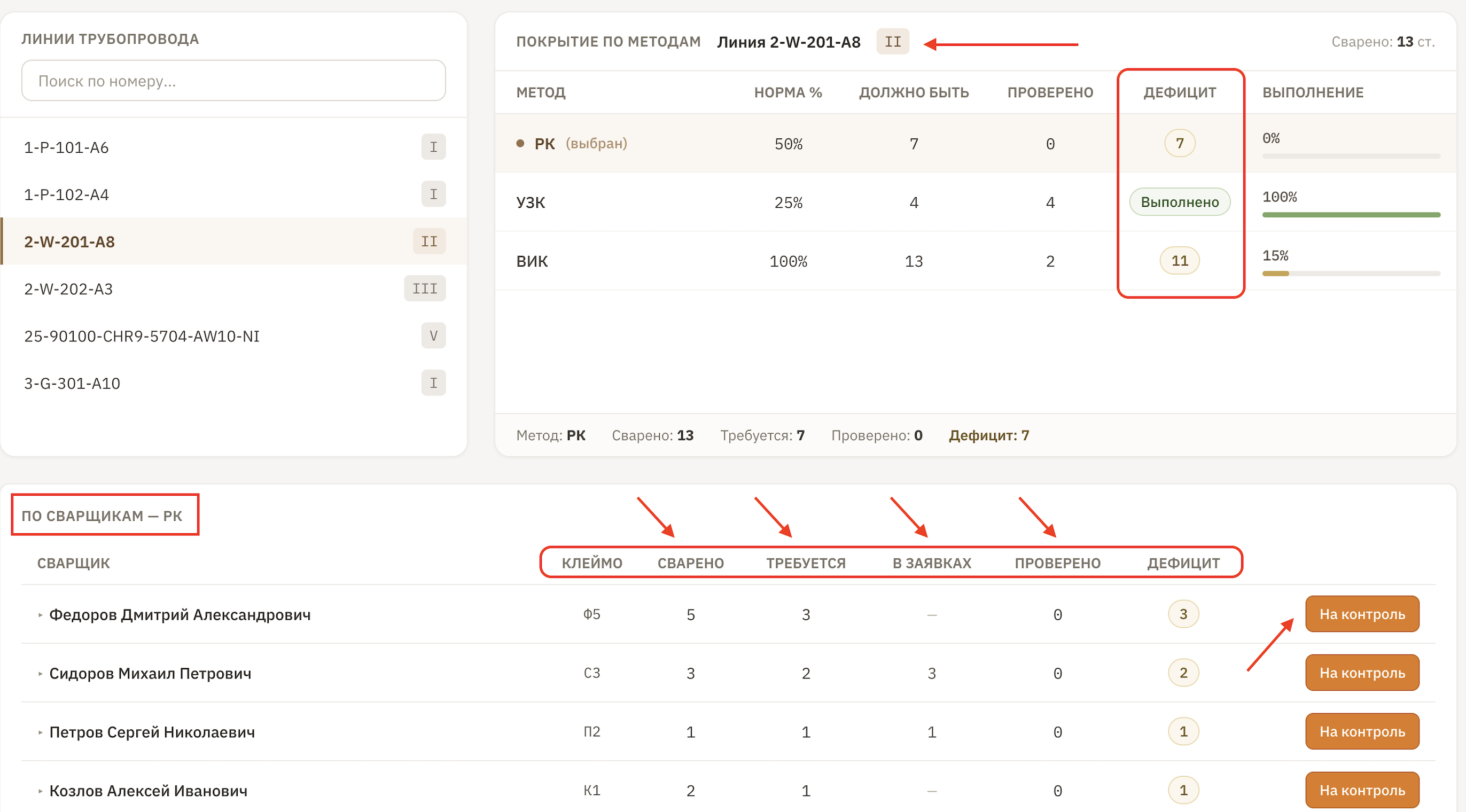
Recording Results and Protocols
The lab technician enters the result into the system - the joint status updates instantly. The PTO engineer sees the full picture across the facility without calls or waiting.
- check_circle Results recorded per method separately: VT, RT, UT, MT, PT
- check_circle For RT: shots linked to joint, film number, defect coordinates
- check_circle Defect classifier per GOST: Тр, Шл, Пр, Пд, Нс etc.
- check_circle RT/UT protocol generation for inclusion in the documentation package
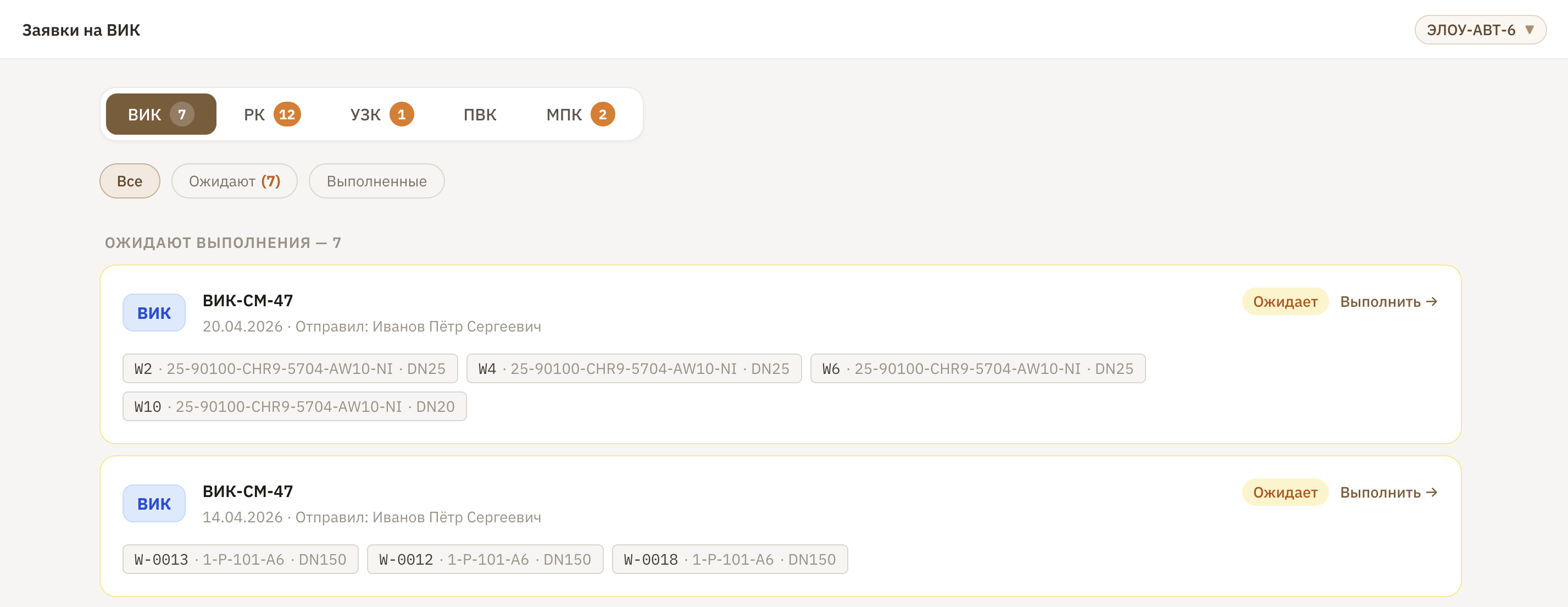
NDT Status - Visible to All Participants
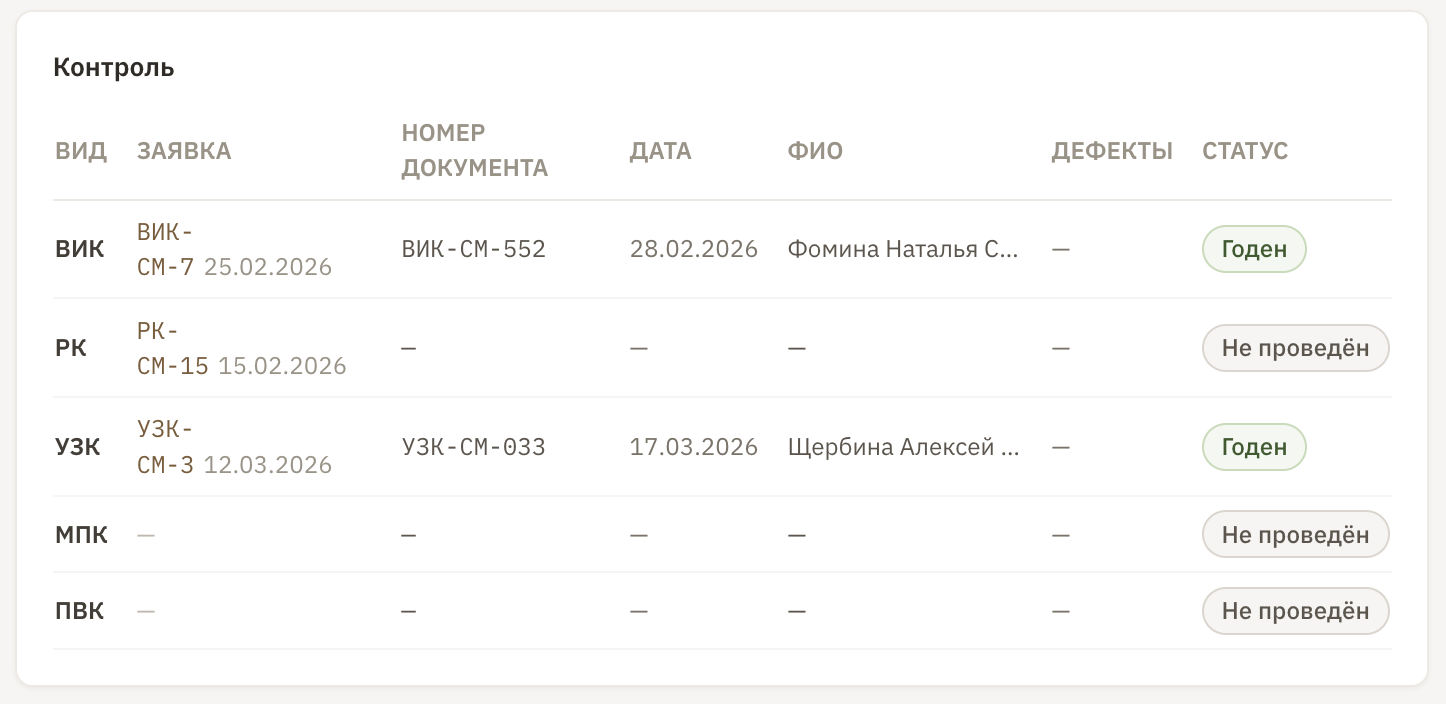
A unified joint register with coverage by each inspection method. No summary Excel sheets or calls to the lab.
Sees for each joint whether VIC passed, whether it is in the RT or UT sample, and whether there are open remarks.
Works via requests: receives the joint list, enters results, and generates protocols directly in the system.
Can see the current inspection status for the facility at any time - without requesting data from the contractor.
See How NDT Works in the System
We'll load your real pipeline lines, generate a sampling, and show how it works in practice. The demo takes 30 minutes.